.png)
Preparing Your Pool for Summer in Austin: Seasonal Pool Maintenance and Leak Prevention
Get your Austin pool ready for summer with this seasonal pool maintenance guide. Learn how to prevent algae, balance water chemistry, detect leaks early, and keep your pool safe in Central Texas.

Summer is just around the corner, and for Austin pool owners, that means it is time to get your swimming pool ready for the busiest season of the year. Preparing your pool for summer is about more than just filling it up and jumping in. In Central Texas, where intense sun, extreme heat, and unique environmental factors push pool systems harder than almost anywhere else in the country, a thorough seasonal pool maintenance routine is the difference between a sparkling pool all summer and a frustrating cycle of algae blooms, cloudy water, and surprise repairs.
At Austin Pool Leak Detection, we help pool owners across Austin, Lakeway, Buda, San Marcos, New Braunfels, and Canyon Lake prepare their pools for the swimming season every spring. Here is our complete guide to making pool ownership easier and keeping your pool safe, clean, and efficient from the first warm weekend through September.
Balance the Water Chemistry Before Summer Temperatures Arrive
Water chemistry is the foundation of pool maintenance in Austin, and it is the first thing you should address when preparing your pool for summer. Central Texas conditions create specific water chemistry challenges that pool owners in other parts of the country simply do not face. The intense Texas sun accelerates chlorine breakdown, high evaporation rates concentrate minerals and total dissolved solids, and seasonal pollen loads introduce organic material that feeds algae growth.
Start by testing your water with a reliable test kit or taking a sample to your local pool supply store. You want to balance the water chemistry across all key parameters: chlorine levels should be between 2 and 4 ppm, pH between 7.4 and 7.6, alkalinity between 80 and 120 ppm, and calcium hardness appropriate for your pool surface type. If your plaster or pebble finish is aging, pay extra attention to calcium levels because low calcium can accelerate surface erosion.
If your pool sat through the winter with minimal chemical treatment, you may need to shock the pool before dialing in the balance. Pool chemicals break down over time, and a heavy shock treatment eliminates any algae, bacteria, or organic buildup that accumulated during the off-season. After shocking, run the pump and filter for at least 24 hours before retesting and adjusting your chemical balance.
Clean the Pool Surface, Tile, and Filter System
Before the swimming season starts, give your pool a thorough cleaning from top to bottom. Brush the walls and floor to loosen any algae or calcium scale that formed over the winter months. In Central Texas, cedar pollen and oak pollen are major contributors to pool contamination in the spring, and that sticky pollen buildup on the tile line and pool surface will feed algae growth the moment water temperatures rise.
Clean the pool tile line with an appropriate tile cleaner to remove mineral deposits and pollen residue. Inspect the plaster or pebble surface for rough spots, cracks, or discoloration. If you notice soft spots or flaking, those areas may need professional attention before summer pool usage puts additional wear and tear on the finish.
Your pool filter is the workhorse of the entire system, and it needs to be in top condition before summer. Clean or replace the filter cartridge, backwash your DE or sand filter, and inspect the filter housing for cracks or worn O-rings. A pool filter that is working at even 80 percent capacity will struggle to maintain water clarity once summer temperatures push algae growth into overdrive. Address it now while pool professionals in Austin have open schedules.
Inspect Pool Equipment and Prevent Algae Growth
Spring is the right time to inspect your pool equipment before the swimming season puts everything under maximum load. Check the pump for unusual noise, vibration, or visible drips around the shaft seal. Inspect the heater ignition and heat exchanger for corrosion or buildup. Test the pool cleaner, pool lights, and any automation or timer systems to make sure everything is running smoothly.
To prevent algae growth before it starts, consider adding a preventive algaecide as part of your opening routine. Algae blooms in Austin pool water can go from invisible to full-blown green pool in as little as 48 hours during peak summer temperatures. Maintaining consistent chlorine levels and running your pump at least 8 to 12 hours per day during the hottest months is essential for keeping your pool clean and preventing algae from taking hold.
If you have had recurring algae problems, look at your pool’s circulation patterns. Dead spots where water does not flow well, particularly around steps, corners, and the deep end, are where algae blooms start. Adjusting your return jets to improve circulation can dramatically reduce the need for chemical intervention and keep the water in Austin pools looking clear throughout the season.
Check for Leaks and Address Water Loss Before Summer
One of the most important and often overlooked steps when preparing your pool for summer is checking for leaks. Evaporation is normal in Central Texas, where summer temperatures regularly exceed 100 degrees and dry air pulls moisture from pool surfaces constantly. But not all water loss is evaporation. A pool leak, even a small leak, can waste hundreds of gallons per week, drive up your water bill, and create soil erosion problems around your pool and home.
Perform a bucket test to establish a baseline. Fill a bucket with pool water, place it on a step so the water levels match inside and outside the bucket, and mark both levels. After 24 hours, compare the drop. If the pool water drops significantly more than the water in the bucket, you likely have a leak that needs professional leak detection.
Pay attention to your water bill as summer progresses. A gradual increase is normal as evaporation rises, but a sudden spike often indicates a new leak. Also watch for soggy spots in the yard, shifting soil around the pool deck, or pool equipment that seems to run harder than usual. All of these are signs that water is escaping from somewhere it should not be.
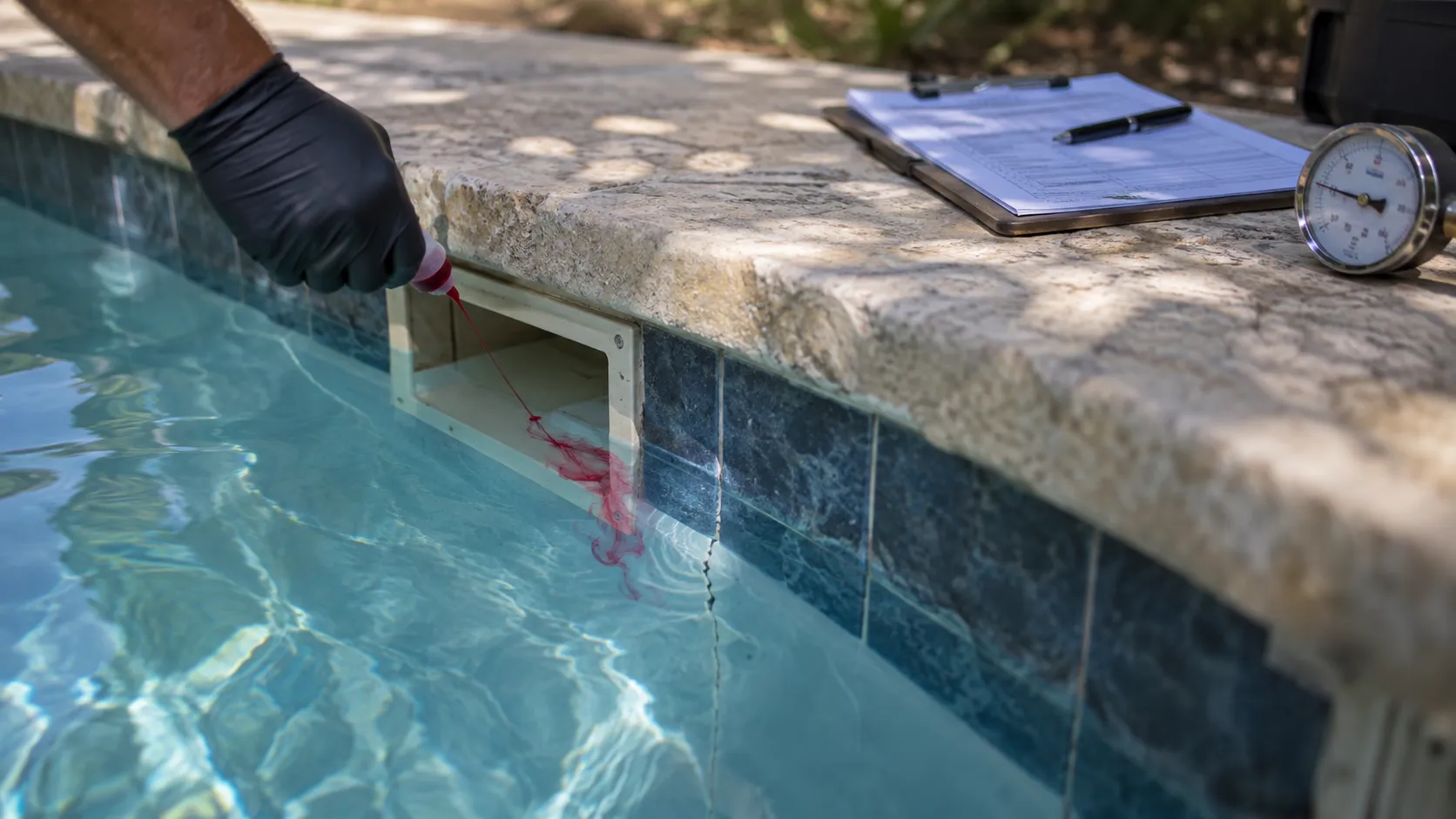
Austin Pool Leak Detection uses advanced technology including Leaktronics-certified equipment, acoustic listening, pressure testing, and dye tracing to detect leaks with precision. Our non-invasive approach means we find the source of the leak without digging up your yard or disrupting your landscape. If you suspect a leak heading into summer, address it now before the problem grows and repair schedules get backed up across the Austin area.
Use a Pool Cover and Practice Water Conservation
Water conservation is a growing priority for pool owners across Central Texas, and using a pool cover is one of the simplest ways to reduce evaporation, keep the water clean, and lower chemical consumption. A quality pool cover can reduce evaporation by up to 95 percent, which in Austin’s climate translates to significant water savings over the course of a swimming season.
Pool covers also keep pollen, debris, and organic material out of the pool when it is not in use, reducing the load on your pool filter and helping maintain water clarity between cleanings. For pool owners in Austin who are conscious about water usage and chemical costs, a cover pays for itself within a single season.
Schedule a Professional Pool Service and Seasonal Inspection
Even with diligent pool care at home, an annual professional pool inspection ensures your pool is ready for heavy summer use. At Austin Pool Leak Detection, our seasonal pool service includes a comprehensive equipment check, pressure testing of plumbing lines, a visual inspection of the pool surface and structure, and a detailed report so you know exactly where things stand heading into the swimming season.
Owning a pool in Austin requires consistent attention, but pool ownership does not have to be overwhelming. A little preparation in the spring keeps your pool safe, your water chemistry balanced, your equipment running efficiently, and your family enjoying a sparkling pool all summer long. Service in Austin from our certified team gives you the confidence that everything works in Central Texas conditions, so you can focus on enjoying the pool rather than maintaining it.
Call Austin Pool Leak Detection today at 737-394-5325 to schedule your inspection and get a free quote.
.png)