.png)
Pool Pipe Leak Repair: How the No-Dig Method Actually Works (From the People Who Do It)
Poo Pipe Repair
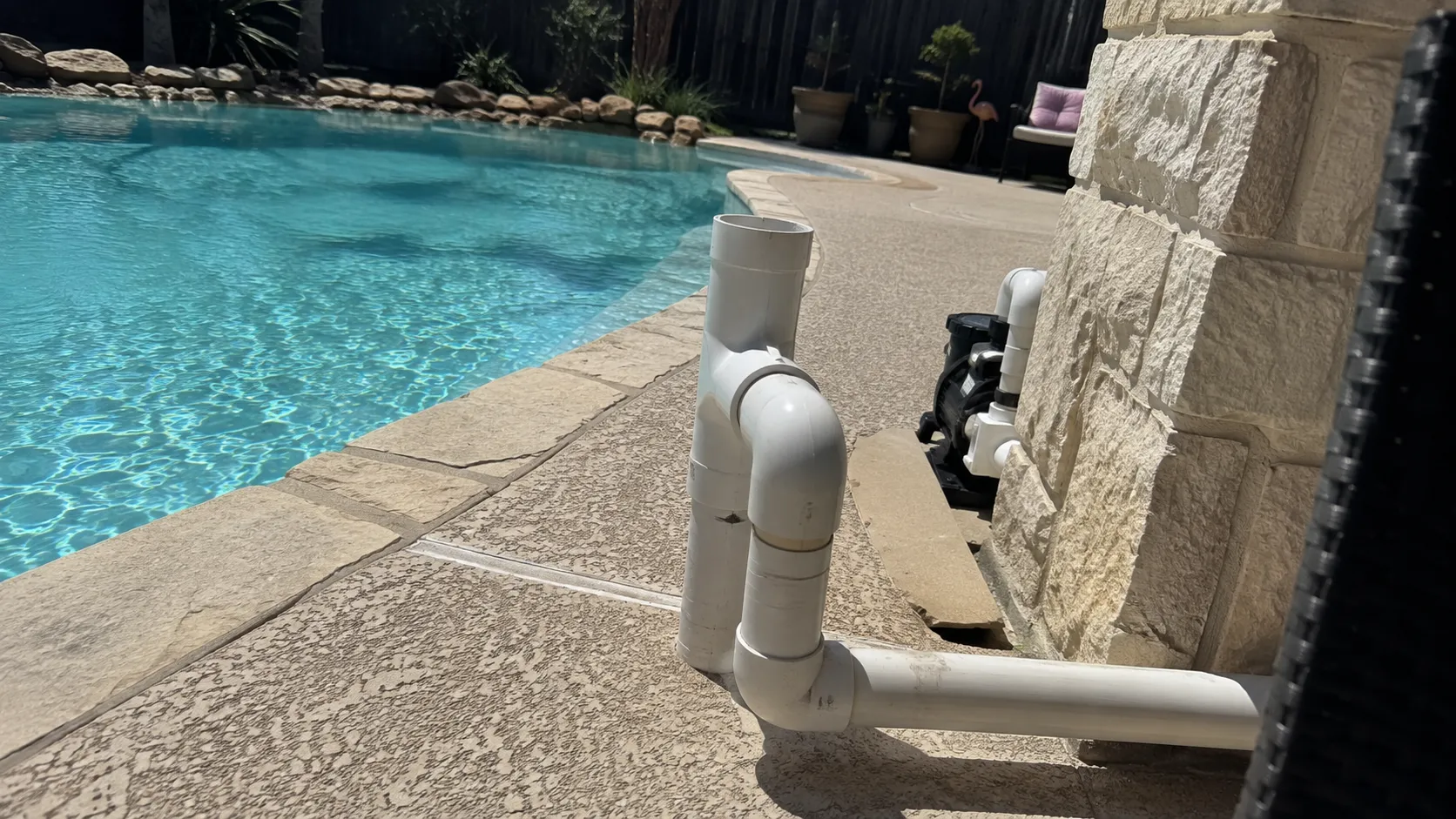
Spend ten minutes researching pool pipe leak repair and you will notice a pattern. The manufacturers say trenchless repair is revolutionary. The pool forums are full of skeptics asking whether it actually holds. Somewhere in the middle sits a pool owner with a leaking pipe under the deck, trying to figure out who to believe.
We install these repairs on Austin pools every week, so we can settle the argument from the field rather than from a product page. The honest answer: no-dig pool pipe leak repair works extremely well for the right leaks and poorly for the wrong ones. The difference comes down to an accurate diagnosis before anyone touches the pipe.
This guide covers how pool pipe leaks happen, how professionals find and fix them without breaking concrete, and where the forum skeptics have a legitimate point.
Why Pool Pipes Leak in the First Place
An inground pool cycles its entire volume several times a day through a network of buried PVC pipe. More water moves through that pool plumbing than most pool owners realize. The lines fail for a handful of predictable reasons.
- Ground movement. Expansive clay across Central Texas swells and shrinks with moisture cycles. That flexes buried pipe until joints and fittings develop hairline cracks.
- Freeze damage. Water trapped in plumbing during a hard freeze expands with enough force to split PVC pipe. Homeowners who winterize your pool lines properly avoid most of this, but Austin freezes arrive fast and catch people off guard.
- Age and settling. Old pipe becomes brittle. Decades of gradual settling stress every glued connection between the pool shell and the pool equipment.
- Poor original construction. Improperly bedded pipe, rushed glue joints, and sharp backfill create weak points that eventually become leaks.
- Vibration and pressure. A pool pump cycling daily for years transmits constant vibration through the plumbing, loosening the weakest connection first.
Notice what is not on that list: catastrophic blowouts. Most common pool plumbing failures we diagnose in Austin are pinholes, hairline cracks, and failing joints. That matters, because small failures are exactly what trenchless repair handles best. The pool light conduit and skimmer body fail in similar quiet ways, which is why a proper diagnosis checks everything.
Suction Side Leaks vs. Pressure Side Leaks in Pool Plumbing
Pool plumbing divides into two halves. The symptoms that indicate a leak depend on which half is failing.
Suction side leaks occur in the lines pulling water toward the pump: the skimmer line, main drain line, and cleaner line. These pipes operate under vacuum, so a crack often pulls air in rather than pushing water out. The classic signs are air bubbles at the return jets, a pump that struggles to prime, and a churning pump basket.
Pressure side leaks occur in the return lines pushing filtered water back to the pool. These pipes push water out through any opening. That means faster water loss, wet areas around the pool, and soggy spots in the yard that never dry.
A pool losing water with the pump running but holding steady with the pump off is telling you the leak lives on the pressure side. Reverse that pattern and you are usually looking at a structural or suction issue. The pool gives you the first clue before we ever run a pressure test.
Either way, a leaking pool compounds its own damage. A modest pipe leak wastes thousands of gallons per month, drives up the water bill, and quietly shifts the soil around the pool structure.
Pool Leak Detection: Finding the Exact Location of the Leak
Repairing a pool pipe leak without knowing precisely where it is amounts to expensive guessing. If you suspect a leak, the diagnosis has to come first. Our pool leak detection process pinpoints the failure before any repair decision gets made.
- Pressure test each line. Isolating and pressure testing individual pipes confirms which line is leaking and roughly how badly.
- Listen with hydrophones and sonar. Pressurized air escaping through a crack into wet soil makes a distinct sound. Leaktronics listening equipment traces that sound through the deck to a specific spot.
- Scope with pipe cameras. For ambiguous cases, a camera run through the line visually confirms the crack, joint separation, or damage from inside the pipe.
- Dye test accessible points. Skimmer throats, returns, and fittings get dye tested to rule out a pool problem that only looks like a pipe problem. Sometimes the fix is a simple skimmer repair, not a pipe job at all.
The result is the exact leak location, marked on the pool deck, with a clear picture of the failure type. Everything downstream depends on this step being right. That is why we back it with a find it or keep looking guarantee.
How to Fix Pool Pipes Without Digging: The Trenchless Process
Trenchless repair seals leaks without cutting or digging by lining the pipe from the inside with a two-part epoxy system. We repair with PipePoxy and PipeFuze, products developed specifically for pool plumbing, and the process runs the same way on most Austin jobs.
Step 1: Isolate and prepare the line. The affected pipe is valved off, drained, and dried with compressed air. Epoxy will not bond to a wet surface, so preparation is not optional.
Step 2: Introduce the sealing material. The two-part epoxy travels through the pipe under controlled air pressure. It coats the interior wall and gets driven into the crack or void where water was escaping to the outside of the pipe.
Step 3: Cure in place. The material hardens against the pipe wall, sealing the failure point and creating a continuous surface, essentially new pipe inside the old pipe. Cure time runs several hours, and the line typically returns to service the same day.
Step 4: Verify with a second pressure test. The leak is fixed when the line holds pressure, not before. Every trenchless repair we complete gets retested before we call the job done.
The entire sequence happens through existing access points. No concrete saw, no excavation, no landscaping damage, and no deck patch that never quite matches.
Does No-Dig Swimming Pool Leak Repair Actually Work?
Pool forums are full of threads asking exactly this, and the skepticism deserves a straight answer rather than a sales pitch.
The skeptics are right about one thing. Trenchless repair applied to the wrong failure is a waste of money. A collapsed line, a fully separated joint, or a pipe crushed by roots cannot be sealed from the inside. Anyone promising otherwise is overselling the method.
Where the skeptics go wrong is assuming most pool pipe leaks fall into that category. They do not. The typical failure we diagnose in Austin is a pinhole or hairline crack in otherwise sound pipe. That is precisely the failure trenchless epoxy was engineered to fix. Sealed and pressure tested, these repairs hold long term because the epoxy becomes a structural liner at the failure point, not a surface patch.
Here is the honest framework for how to fix a pool leak by method:
Matching the method to the diagnosed failure is the entire game. Diagnose and repair, in that order, never the reverse.
Does Your Type of Pool Matter?
Yes, though less than most pool owners expect. The plumbing under a concrete pool, a fiberglass shell, and a vinyl liner pool is the same buried PVC, and it fails the same ways. Trenchless repair works on the pipe regardless of what kind of pool sits above it.
Where the type of pool matters is everything around the pipe. A vinyl pool liner leak is its own separate repair category with its own methods. Fiberglass shells rarely crack but their fittings do. Concrete and gunite pools, the majority of what we see in Austin, add structural questions: a shell crack and a pipe leak can produce identical symptoms, and only proper leak detection tells them apart.
A new pool is not exempt either. We regularly find construction-era plumbing defects in pools under five years old. Age raises the odds of a leak, but it has never been a requirement.
Can Underground Pool Pipes Be Repaired Without Wrecking the Yard?
Yes, and this question is where trenchless repair earns its reputation in Austin specifically. Local pools tend to sit inside limestone patios, stamped concrete, and mature landscaping. Traditional excavation through all that carries a restoration bill that often costs more than the plumbing work itself. A larger pool with longer runs only raises the stakes.
An underground pool pipe sealed from the inside leaves everything above it untouched. The deck stays intact. The yard stays intact. The repair happens through the same access points the water already uses.
When a line genuinely needs replacement, we say so, and we coordinate the work with vetted Austin partners while overseeing the job through completion. What you will never get from us is a dig recommendation for a leak that a liner would have sealed.
What a Pool Pipe Leak Costs You While You Wait
The most expensive version of any pool pipe leak is the one that runs another season. Deferred repairs cost more to repair in four compounding ways.
- Water loss climbs, and with it the monthly bill. Even a small pipe leak can waste more water than the household uses.
- Escaping water saturates and shifts the soil. That stresses the pool shell and sets up the structural cracks that turn a plumbing repair into a plaster repair.
- Suction side air leaks abuse the pump daily, shortening the life of the motor and seals. No amount of routine pool maintenance offsets a pump running on air.
- Small failures grow. A pinhole that qualified for trenchless repair in April can become a separated joint that requires excavation by August.
If your pool is leaking more than a quarter inch per day beyond evaporation, or the pump has started struggling to prime, the pipe is already talking. Schedule a leak detection visit before the repair options narrow.
Pool Pipe Leak Repair in Austin: How We Run the Job
Our leak detection and repair services follow the same sequence across Austin, Cedar Park, Round Rock, Lakeway, Pflugerville, Leander, Buda, San Marcos, New Braunfels, and Canyon Lake.
- Full leak detection first. Pressure testing, sonar, pipe cameras, and dye testing locate every leak, not just the loudest one. Multi-leak pools are common after freeze years. Fixing one leak of three solves nothing.
- Plain-English diagnosis. You get the leak location, the failure type, and the repair method that fits it, with the reasoning explained rather than asserted.
- The repair itself. Trenchless epoxy repairs and accessible spot fixes happen the same day in most cases. Larger traditional repairs get coordinated with trusted local partners.
- Pressure test verification. The line holds pressure or the job is not finished. You receive photos and documentation of the completed work.
For a deeper look at how we choose between repair methods, see our guide on pool plumbing repair in Austin. For the factors that move repair pricing up or down, see what drives pool leak repair cost.
Book Pool Pipe Leak Repair in Austin
You do not have to choose between ignoring a leaking pipe and jackhammering your deck. Pool pipe leak repair without digging is real, proven, and running in Austin backyards every week. It just has to be matched to the right leak by someone who diagnoses before they sell.
Call 737-394-5325 or request a quote online. We will find the exact location of the leak, walk you through your options to fix leaks the smart way, and seal the line without touching your deck whenever the failure allows it.
.png)