.png)
Pool Plumbing Repair Near Me: Why Austin Homeowners Are Skipping the Jackhammer
PipePoxy seals leaks from inside the pipe. No deck damage, no excavation, fast turnaround.
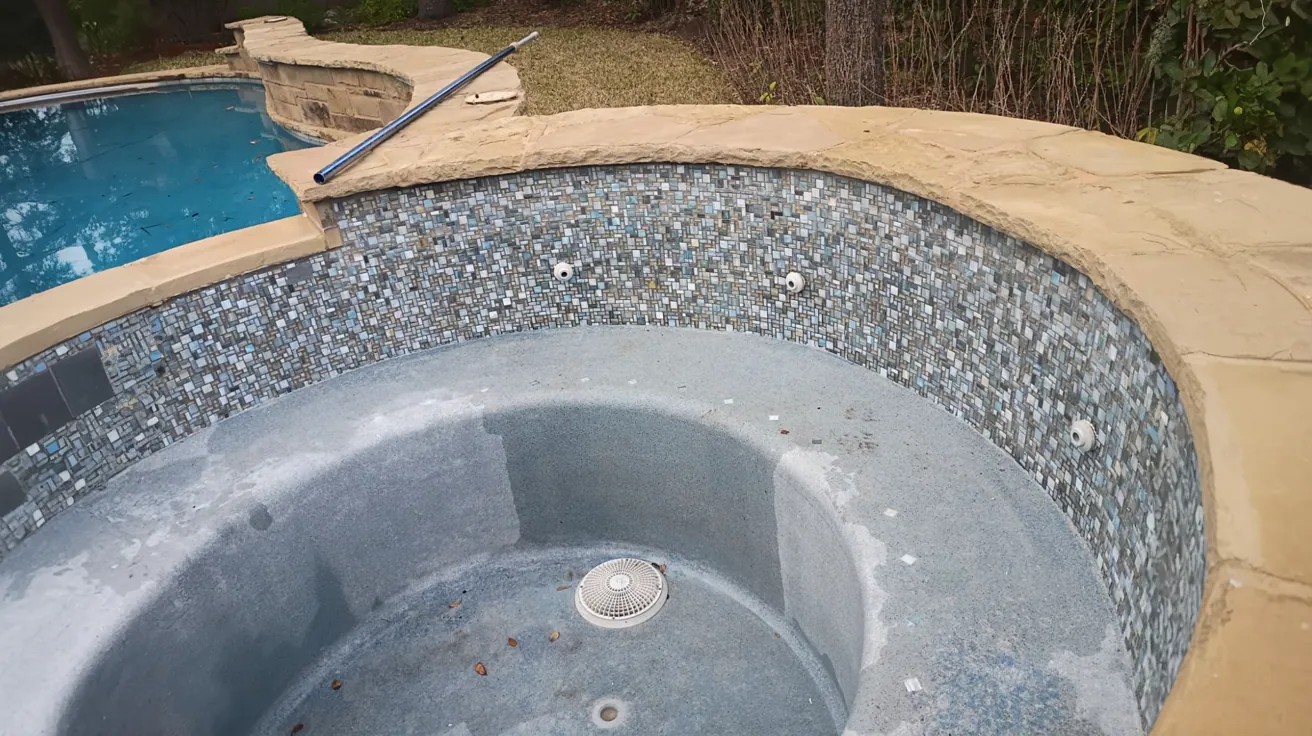
You called a pool company about a leak. They came out, told you the line under your deck was bad, and quoted you a number that made you set the phone down. Most of the cost is not the pipe. It is the breaking, the digging, and the patching after.
Here is what almost nobody tells you when you search "pool plumbing repair near me" in Austin: that pipe usually does not need to be dug up at all. There is a non-invasive repair that seals the leak from inside the pipe, with no jackhammer, no torn-up deck, and no shredded landscaping.
This is what we do every week across Austin, Lakeway, Cedar Park, and the Hill Country. Below is how pool plumbing repair near me actually works when you call a leak specialist instead of a generalist, and why "dig and replace" is rarely the right first move.
The Austin Pool Plumbing Repair Scenario Nobody Talks About
A typical call goes like this. Homeowner notices the auto-fill running too often. They call a pool service. The tech finds water somewhere it should not be, points at the deck, and says the suction line under the slab is leaking.
The quote that follows almost always involves removing decking, breaking concrete, digging through Hill Country clay and limestone, replacing pipe, and patching the surface back together. The patch never quite matches the original deck. The lawn takes a season to recover.
Most pool plumbing repair quotes in Austin TX start with "we'll need to break up your deck." That's not the only option, and nine times out of ten on small pinhole leaks and hairline cracks, it's not the right one.
The honest reason dig-and-replace gets quoted so often is simple. It is what most pool companies know how to do. They are not plumbing specialists. They are pool techs with a saw and a shovel.
What "Pool Plumbing Repair" Actually Covers
When people search for pool plumbing repair near me, they usually mean one of these specific things:
- Suction-side leaks: skimmer lines, main drain lines, anything pulling water to the pump
- Return-side leaks: pressure lines pushing water back into the pool
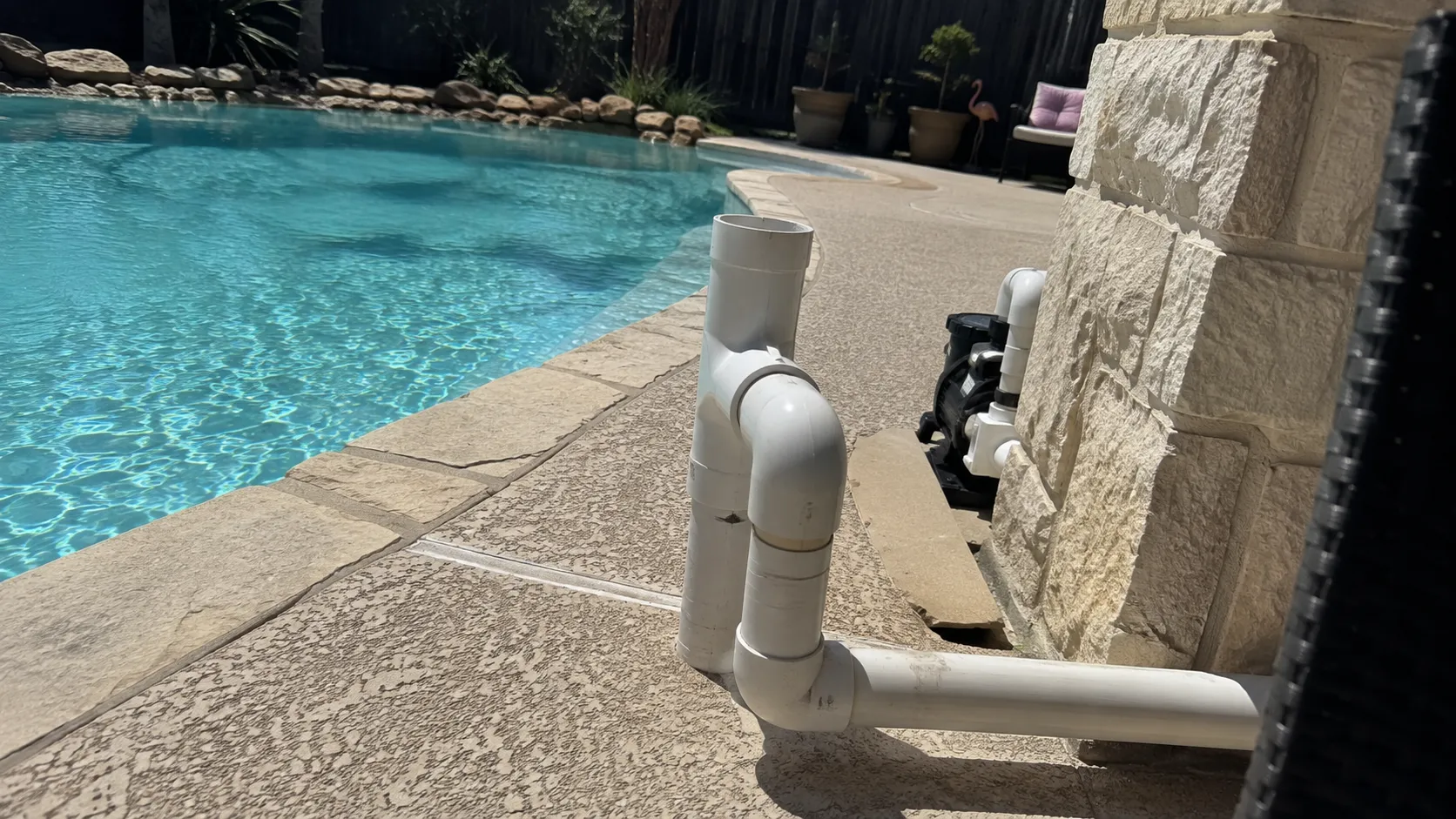
- Equipment pad plumbing: PVC at the pump, filter, and heater
- Skimmer throat cracks: where the line meets the skimmer body
- Cleaner line leaks: dedicated Polaris or pressure-side cleaner lines
- Underground pipe leaks: the buried sections under decks, patios, or yards
- Air leaks at fittings: suction-side problems pulling air into the system
Above-ground plumbing at the equipment pad is usually a quick spot fix. The expensive stuff is everything underground. That is the work where the repair method matters most.
How No-Dig Pool Pipe Repair Actually Works
The repair method that has changed the game for Austin pool owners is internal pipe lining, sold under names like PipePoxy. It is a non-invasive epoxy system that seals leaks from inside the existing pipe.
Here is the basic process:
- Find the leak first. This is where pool leak detection comes in. Sonar, pipe cameras, and pressure testing pinpoint the exact location and the type of failure.
- Isolate and dry the line. The affected pipe is cleared of water and prepped with compressed air.
- Apply the epoxy. The lining material is pushed through the pipe under controlled pressure, coating the entire inside surface.
- Cure in place. The epoxy hardens against the inside wall, sealing pinholes and hairline cracks and creating a new continuous interior surface.
- Pressure test the result. The line is retested to confirm the leak is gone.
What it does well: pinhole leaks, hairline cracks, freeze-stress fissures, and small joint failures in PVC. What it does not solve: completely collapsed lines, severe physical damage, or full pipe blowouts. Those still need traditional repair, and we coordinate that work through vetted Austin partners.
The point is to use the right method for the actual problem. Most pool plumbing leaks in Austin are small. Small leaks do not need big repairs.
PipePoxy vs. Dig-and-Replace: Side by Side
This is the comparison every Austin homeowner deserves before they sign a repair contract.
For most pool plumbing leaks we see in Austin, lining is the smarter first move. Get a real diagnosis before you let anyone bring a saw to your deck.
Red Flags That Mean You Need Pool Plumbing Repair
If you are seeing any of these signs, your pool plumbing is talking to you. Listen early and the fix is small.
- The pump loses prime or struggles to prime in the morning
- Air bubbles coming out of the return jets
- The auto-fill runs more often than it used to
- A wet patch in the yard that never quite dries
- Settling around the equipment pad or pool deck
- Water bill jumped and nothing else in the house changed
- The pump runs but flow at the returns is weak
- A hissing or sucking sound at the pump basket lid
Two or more of these at once means you have a real problem and it is going to grow. Schedule a leak inspection before the small leak becomes a structural one.
Why Hill Country Pools Are Hard on Plumbing
Pool plumbing in Central Texas takes a beating that pools in milder climates never see. Three local conditions matter most.
Expansive clay and limestone shift. Austin sits on soil that swells when wet and shrinks when dry. Pool decks move. Buried pipe takes the stress at the joints. Hairline cracks open at fittings, not in the middle of the pipe.
Freeze damage. Central Texas hard freezes have cracked exposed plumbing at the equipment pad and in shallow buried lines across the metro. Some of this damage shows up immediately. A lot of it is slow and shows up months later as a small leak that grows over a season.
Hardscape and tight backyards. Austin pools often sit inside expensive limestone patios, custom decks, and tight property lines. Excavating through that is brutal. The dig is the expensive part, not the pipe. Lining the pipe instead protects everything around it.
These conditions are exactly why no-dig repair makes sense in our market. The repair method should match the local reality, not the contractor's habit.
Pool Plumbing Repair Near Me: Our Process Step by Step
When you search for pool plumbing repair near me and call us, here is how the job actually runs.
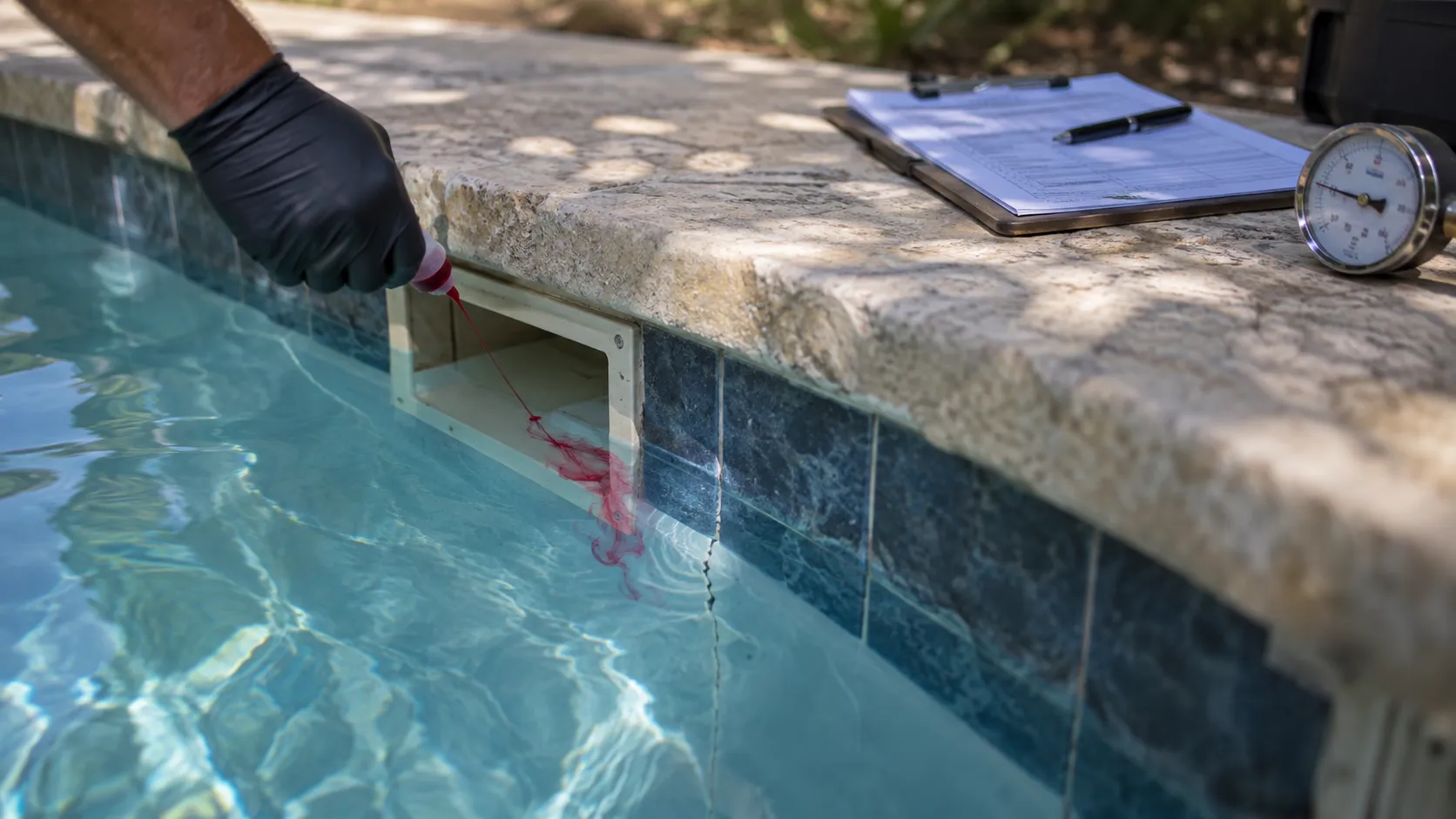
Step 1: Leak detection. We use Leaktronics-grade sonar, pipe cameras, dye testing, and pressure testing to find the exact location and type of leak. No guessing. We back this with a "find it or keep looking" guarantee.
Step 2: Diagnosis and recommendation. We tell you what the leak is, where it is, and the best repair method for that specific failure. Sometimes that is PipePoxy lining. Sometimes it is a small spot fix at the equipment pad. Sometimes the right answer is a partner doing traditional repair, and we coordinate that work.
Step 3: The repair. Most lined repairs are completed the same day. Spot fixes are even faster. Larger jobs are scheduled with our trusted Austin partners and we oversee the work from start to finish.
Step 4: Pressure test and report. Every repair gets retested. You get photos, notes, and a clear record of what was done.
This is what pool plumbing repair near me should look like. Find the leak first. Match the method to the actual problem. Save the deck.
Service Area for Pool Plumbing Repair in Austin
We handle pool plumbing repair across:
- Austin, including downtown, central, north, and south
- Lakeway and West Lake Hills
- Cedar Park, Round Rock, Pflugerville, and Leander
- Buda and the southern suburbs
- San Marcos, New Braunfels, and Canyon Lake
Same-day scheduling is available across the full service area. If you are inside our roughly 20-mile radius, we can usually be on site fast.
When to Call a Plumber Versus a Pool Specialist
Quick rule. A general plumber is right for indoor leaks, supply lines, and sewer work. A pool specialist is right for everything inside the pool circulation loop, from the skimmer through the pump and filter and back to the returns.
If your pool is losing water, calling a general plumber is almost never the right move. We covered the full breakdown in our guide on pool leak detection vs. plumber. Read that if you are not sure who to call.
Book Pool Plumbing Repair in Austin
If you are searching pool plumbing repair near me, you are losing water somewhere and you want it fixed without destroying your backyard. We get it. Our entire business is built on finding the leak, choosing the smart repair, and getting you back to a working pool fast.
Call 737-394-5325 or request a quote online. Get a real diagnosis before anyone breaks ground on your property.
For more on the diagnostic side, see our pool leak detection service. For coordinated repair work, see pool leak repairs.
.png)