.png)
Pool Leak Detection vs Plumber: Who Should You Call for a Pool Leak?
Pool Leak Detector

Your pool is losing water. The level keeps dropping. Your water bill is climbing. You need help fast. But who do you call? A plumber? A pool company? A leak detection specialist?
This is one of the most common questions we hear from Austin pool owners, and the answer matters more than you might think. Calling the wrong pro can waste your money, delay the repair, and even make the problem worse. Calling the right pro gets your pool fixed the first time, with no guesswork.
At Austin Pool Leak Detection, we get calls every week from people who first hired a plumber to find their pool leak. The plumber showed up, looked around, and said they were not able to find it. Some plumbers even suggested digging up the pool deck or breaking into the pool shell to trace the leak. That is the wrong approach for pool leaks, and it costs homeowners thousands of dollars in unneeded damage.
This guide breaks down the key differences between a plumber and a pool leak detection specialist. We will cover when each one is the right call, the tools and methods we use to detect pool leaks, and why pool leak detection is its own skill set.
We serve pool owners across Austin, Lakeway, Buda, San Marcos, New Braunfels, and Canyon Lake. If you suspect a leak, this article will help you pick the right expert for the job.
What a Plumber Does (and What They Do Not Do)
A plumber is a licensed professional who works on the plumbing inside your home. That includes sinks, toilets, showers, water heaters, main water lines, sewer lines, and fixture repair. A good plumber can diagnose a slab leak, fix a burst pipe, install a new water heater, or clear a drain. They work with copper, PEX, and PVC in homes every day.
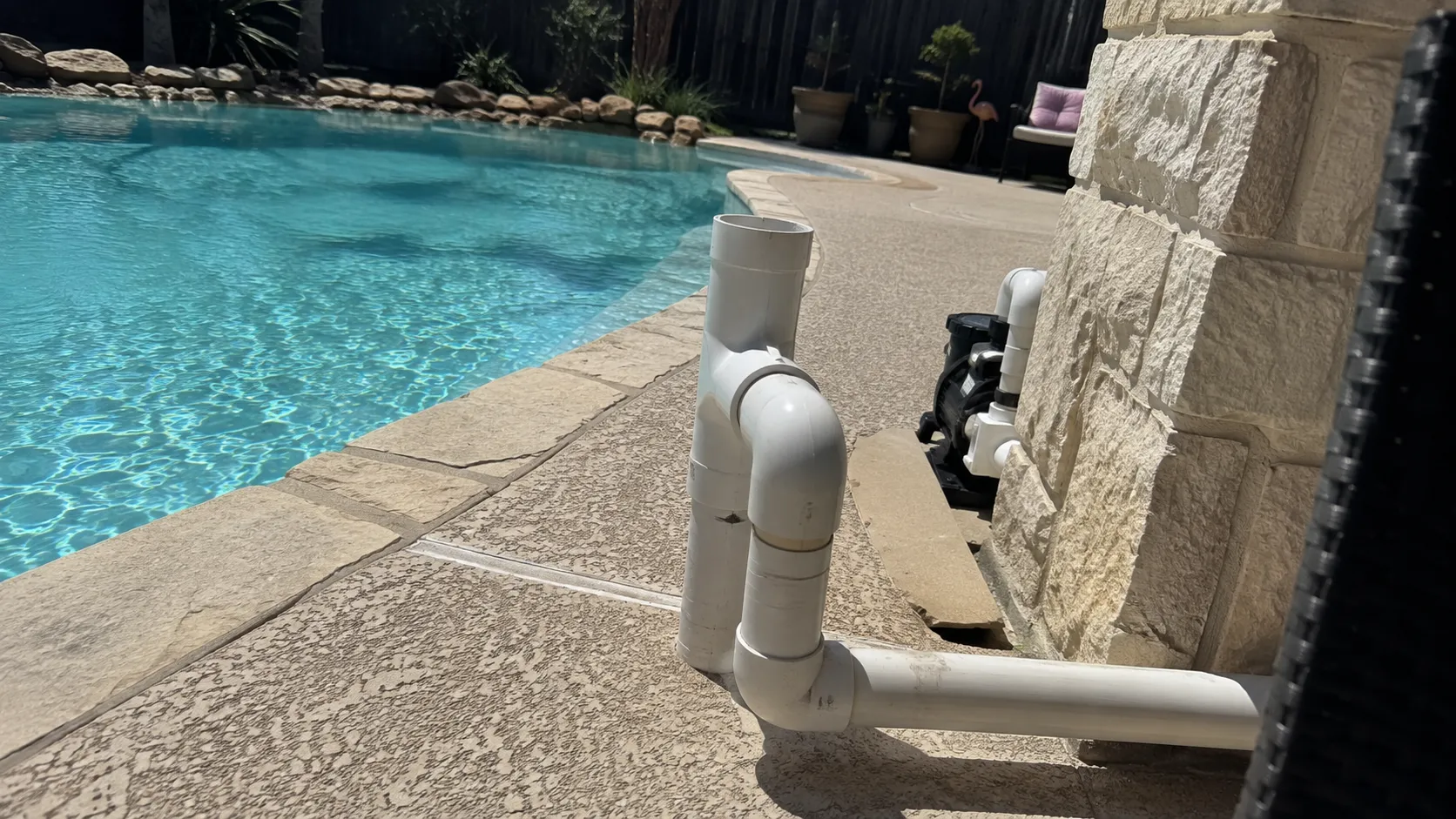
But here is the catch. A plumber is trained on home plumbing, not pool plumbing. The two systems look similar but work very differently. A pool has its own pump, filter, skimmer, drain lines, return lines, suction lines, and auto-fill. The plumbing runs under the pool deck, through the pool shell, and around the pool in patterns no plumber sees in a house.
Most plumbers do not own pool leak detection tools. They do not have pool-specific pressure test equipment. They cannot run a dye test in your pool water. They do not have the listening devices needed to locate an underground leak under a concrete pool deck. And they have not been trained to inspect a pool shell for plaster cracks, skimmer separation, or return fitting issues.
That does not mean plumbers are bad at what they do. It means pool leak detection is not what they do. It is a different field with different tools and different methods.
What a Pool Leak Detection Specialist Does
A pool leak detection specialist focuses on one thing: finding and confirming pool leaks. At Austin Pool Leak Detection, our team is Leaktronics certified. That means we use pool-specific leak detection devices, not general plumber tools. Our job is to check your pool from top to bottom, run a full test series, and pinpoint every leak before any repair work begins.
Here is what a pool leak detection specialist brings to the table that a plumber does not:
- Pool-specific test equipment. We use pressure test kits built for pool plumbing, not home plumbing. We plug every return, drain, skimmer, and suction line, then pressurize each one to check for a leak. A plumber's pressure test tools are made for home pipes, not pool construction.
- Acoustic listening devices. We use a specialized meter that lets us hear a leak under the pool deck or inside the pool shell. The device picks up the sound of water or air escaping, and it helps us locate the leak within inches. No plumber carries this kind of tool.
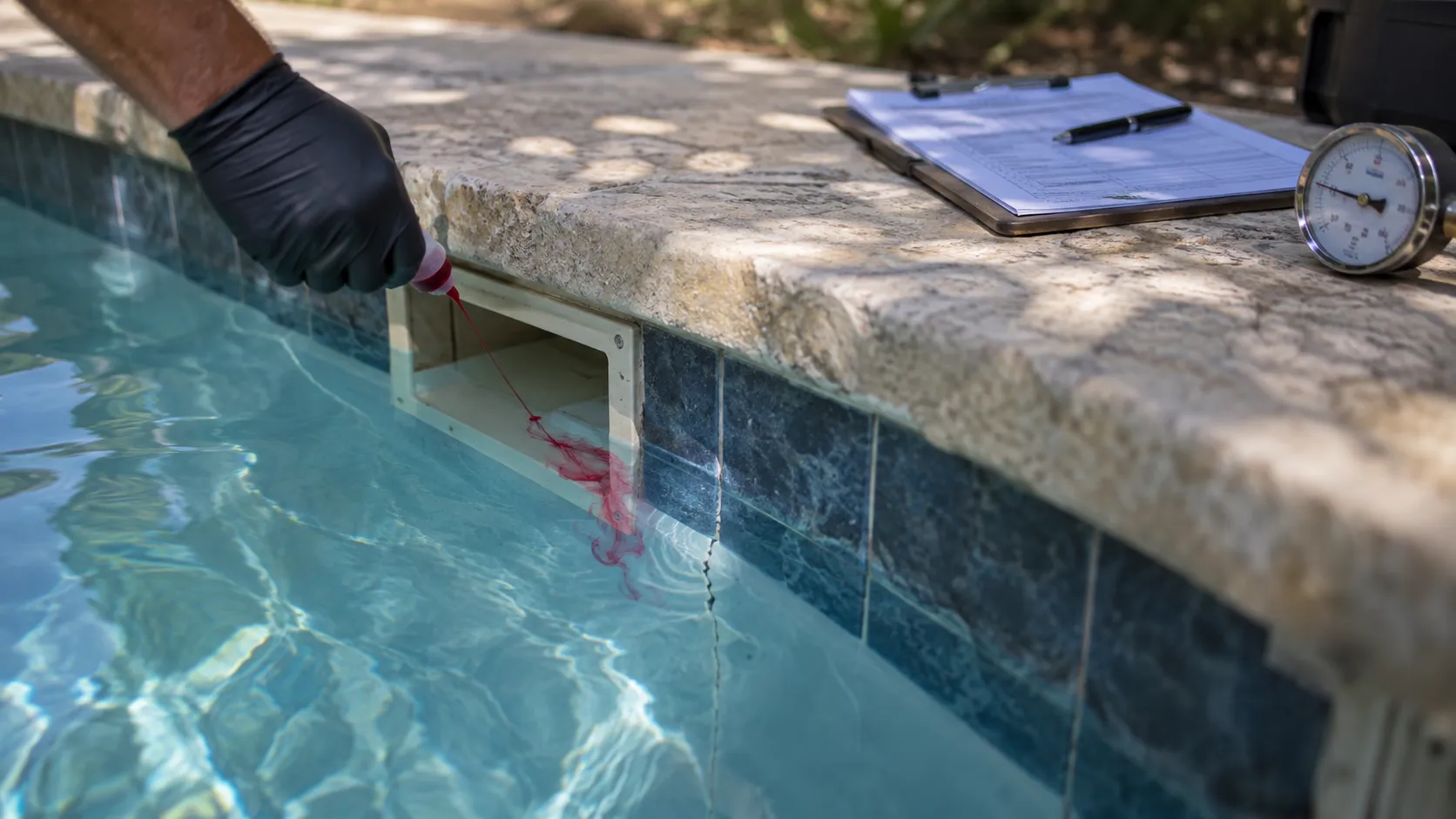
- Dye test experience. A dye test works only in still water, with the right dye, and with a trained eye. We run dye tests around the skimmer, return fittings, pool light, main drain, and any visible crack in the plaster to confirm the exact location of each leak.
- Bucket test knowledge. We use the bucket test to confirm a pool leak exists and rule out evaporation. We know how much water per day a pool can lose to normal evaporation in Austin's heat. A plumber does not.
- Pool construction expertise. We know how pools are built. We understand the joint between the skimmer and the pool shell. We know where plaster cracks form. We know how return lines run under the deck. That knowledge lets us check the right spots first.
Pool Leak vs Plumbing Leak: Signs and Symptoms
Before you call anyone, it helps to know whether the leak is a pool leak or a home plumbing leak. Some signs point clearly to one or the other, and the right call depends on which one you are dealing with.
Call a plumber if you see these signs:
- A drop in water pressure inside the house
- A wet spot on a wall, floor, or ceiling inside the home
- A running toilet or dripping fixture
- A water heater leak or burst pipe near the home's plumbing
- Your home water meter keeps spinning even when no water is being used inside
Call a pool leak detection specialist if you see these signs:
- The pool water level drops more than an inch of water per day
- You are adding more water per week than usual to refill the pool
- The pool pump loses prime or sucks air from the skimmer basket
- You see a wet spot on the pool deck, around the pool, or near the equipment
- The plaster shows new cracks or the tile line has gaps
- Your water bill jumped but nothing in the house has changed
- The pool auto-fill runs non-stop
The key test is simple. If the leak is inside the house, call a plumber. If the leak is in the pool, the pool plumbing, the pool shell, or the pool equipment, call a pool leak detection specialist. A plumber will not be able to find a leak in your pool plumbing, and a leak detection specialist is not the right pick for a slab leak inside the home. The best indicator is where the amount of water is being lost: home side means plumber, pool side means specialist. To fix a leak properly, you need the right pro for the job.
The Bucket Test: Confirm a Pool Leak Before You Call Anyone
Before you pick up the phone, you can do a quick test at home to confirm whether your pool has a real leak or you are just seeing evaporation. The bucket test takes five minutes to set up and gives you a clear answer in 24 hours.
Here is how to run a bucket test:
- Fill a five gallon bucket with pool water and set it on the top step of the pool.
- Mark the water level inside the bucket and mark the pool water level on the outside of the bucket. The two should match when you start.
- Turn off the pool pump, auto-fill, and any water features. The water must be still.
- Wait 24 hours.
- Check both marks. If the pool water level dropped more than the bucket water level, you have a leak.
If the bucket test shows a real loss of water, do not call a plumber. A plumber will not be able to find the pool leak with their tools. Call a pool leak detection specialist instead. We will run a full test series, locate the leak, and give you a clear recommendation for repair.
How Pool Leak Detection Actually Works
When you hire Austin Pool Leak Detection, here is the process we follow to detect and confirm every leak:
Step 1: Inspect the pool. We walk around the pool and check the shell, plaster, tile line, skimmer, returns, main drain, pool light, and pool deck. We look for visible signs of a leak. This helps us focus the test series on the most likely areas.
Step 2: Dye test. We run a dye test around every fitting, skimmer, and visible crack. Dye is pulled toward any active leak in the pool shell. A dye test confirms surface leaks fast.
Step 3: Pressure test. We isolate each plumbing line and run a pressure test. We plug the return, drain, skimmer, and suction lines one by one and pressurize each to about 20 psi. A line that loses pressure has a leak. This is how we detect an underground leak that no dye test can find.
Step 4: Acoustic location. Once the pressure test confirms which line has a leak, we use our listening device to locate the exact spot. We walk the pool deck with the meter, and the tool tells us where the leak is, often within a few inches.
Step 5: Report and repair recommendation. We give you a full report with photos, test results, and a clear repair plan. You know exactly what is wrong, where it is, and what the fix will cost. No guesswork. No digging up the whole pool deck.
A plumber cannot do any of this. Most plumbers do not own the right tools, and even if they did, they have not been trained to use them on a pool.
Pool Leak Detection vs Plumber: A Side by Side Look
The table below shows the key differences between a pool leak detection specialist and a plumber so you can pick the right pro for your pool leak.
The answer is clear. For a pool leak, a pool leak detection specialist is the right expert. A plumber is the right call for a home plumbing leak or a fixture repair.
Why Calling a Plumber First Can Cost You More
We see it all the time. A pool owner suspects a leak, calls a plumber because the plumber is already in their contact list, and ends up paying twice. The plumber shows up, runs a few basic checks, cannot find the leak, and refers the owner to a pool company. By that point, the homeowner has paid a service fee to the plumber and is back at square one.
In the worst cases, the plumber tries to locate the leak by guessing. They may suggest breaking into the pool deck or digging around the pool to find an underground leak. That kind of pool repair work, done without real leak detection first, can damage the pool deck, tear up the plaster, and still miss the actual leak. Now you have a pool leak, a damaged deck, and a bigger repair bill.
A pool leak detection specialist does the locating first and the digging last. We confirm where the leak is before any repair begins. That way, if we do need to cut into the pool deck, we know the exact spot, and the repair is as small as possible. Most of our clients save thousands of dollars compared to what a non-specialist approach would cost.
When to Call Austin Pool Leak Detection
If any of these are true for your pool, it is time to call a pool leak detection specialist:
- You ran the bucket test and the pool is losing water faster than the bucket
- Your pool pump is running but keeps losing prime or sucking air
- You see wet areas around the pool or a soft spot on the pool deck
- Your water bill jumped and you cannot find a plumbing leak in the house
- The pool auto-fill is running far more than normal
- You see new cracks in the plaster or gaps around the skimmer
- A plumber already came out and was not able to find the leak
- You are buying or selling a home and want to confirm the pool has no leaks
We serve Austin and the surrounding cities of Lakeway, Buda, San Marcos, New Braunfels, and Canyon Lake. Our team shows up on time, runs a full test, and gives you honest advice on every pool leak. We carry the right tools, we know the right method, and we have found leaks for hundreds of Austin pool owners.
We do not guess. We do not dig first. We detect, confirm, and then repair. That is the difference between a pool leak detection specialist and a plumber.
Skip the Guesswork. Call the Pool Leak Specialist.
Pool leaks need a specialist, not a plumber. A plumber is a great pro for your home plumbing, but a pool leak is a different animal. It takes pool-specific tools, pool-specific methods, and pool-specific training to find and fix a pool leak the right way.
Austin Pool Leak Detection is the specialist Austin pool owners trust to locate every leak, from a small return line seep to a full underground leak under the pool deck. Our Leaktronics certified team uses pressure testing, acoustic meters, dye tests, and pool inspection methods that a plumber simply does not have.
Call Austin Pool Leak Detection today at 737-394-5325 to schedule your pool leak check. Fast service, clear reports, and honest recommendations. We find the leak so you can fix the leak.
.png)