.png)
Pool Losing Water But No Visible Leak? Here's What Austin Pool Owners Need to Know
Is your Austin pool losing water with no visible leak? Is your Austin pool losing water with no visible leak? Learn how to tell if it's evaporation or a hidden leak.
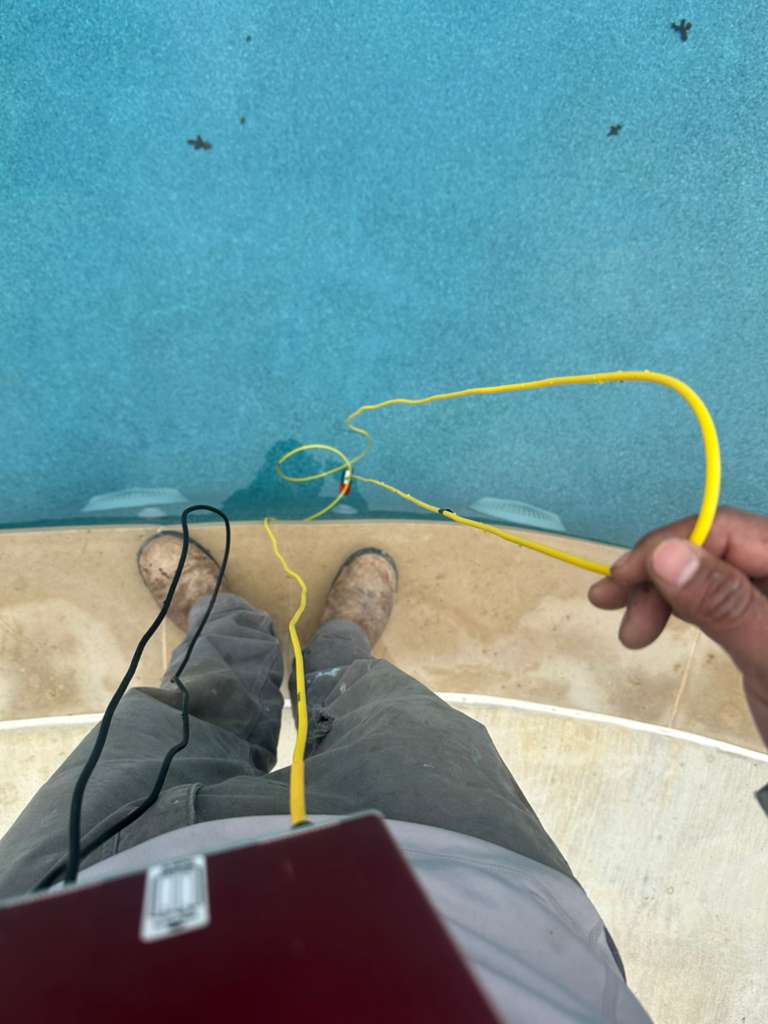
You step outside, glance at your pool, and something feels off. The water level has dropped — again. But there are no puddles around the deck. No cracks you can see. No obvious signs of trouble.
So what gives?
If your pool is losing water but there's no visible leak, you're not alone. This is one of the most common concerns Austin pool owners face, especially during our brutal summer months when temperatures stay above 100°F for weeks at a time.
The good news? There's always an answer. The tricky part is knowing whether you're dealing with normal evaporation or a hidden leak that could cost you hundreds — even thousands — if left unchecked.
At Austin Pool Leak Detection, we help homeowners solve this exact mystery every week. Here's how to figure out what's going on with your pool.
How Much Water Loss Is Normal for an Austin Pool?
Every pool loses water. That's just physics. In Austin's hot, dry climate, evaporation can account for a surprising amount of water loss.
Here's what's considered normal:
- Average evaporation rate: 1/4 to 1/2 inch per day in Austin
- During peak summer heat (June–September): Up to 3/4 inch per day is possible
- With water features running (fountains, spillovers, waterfalls): Water loss can increase by 30–50%
If your pool is losing more than an inch of water per day with no rain and the pump off, that's a red flag. Something beyond evaporation is likely going on.
Pro Tip from Hector at Austin Pool Leak Detection: "A lot of pool owners call us thinking they have a massive leak, and sometimes it really is just Austin heat doing its thing. But when they're adding water twice a week or more? That's when we know there's a hidden leak somewhere."
How to Tell If It's Evaporation or a Hidden Leak
Before calling a professional, there's a simple DIY test you can do right at home. It's called the bucket test, and it takes about 24 hours.
The Bucket Test: Step by Step
- Fill a 5-gallon bucket about 3/4 full with pool water
- Place the bucket on the first or second step of your pool so it's partially submerged
- Mark the water level inside the bucket AND the pool water level on the outside of the bucket
- Wait 24 hours — don't use the pool, turn off the autofill, and leave the pump running normally
- Compare the levels the next day
If the pool water dropped more than the bucket water — you likely have a leak.
If both levels dropped roughly the same amount — it's evaporation.
This test works because both the bucket and the pool are exposed to the same temperature, wind, and humidity conditions. The only difference? The bucket can't leak.
Where Do Hidden Pool Leaks Actually Hide?
This is where it gets frustrating. A pool leak doesn't always announce itself with a puddle or a crack. In fact, most leaks in Austin pools are completely invisible to the naked eye. They hide in places you'd never think to look:
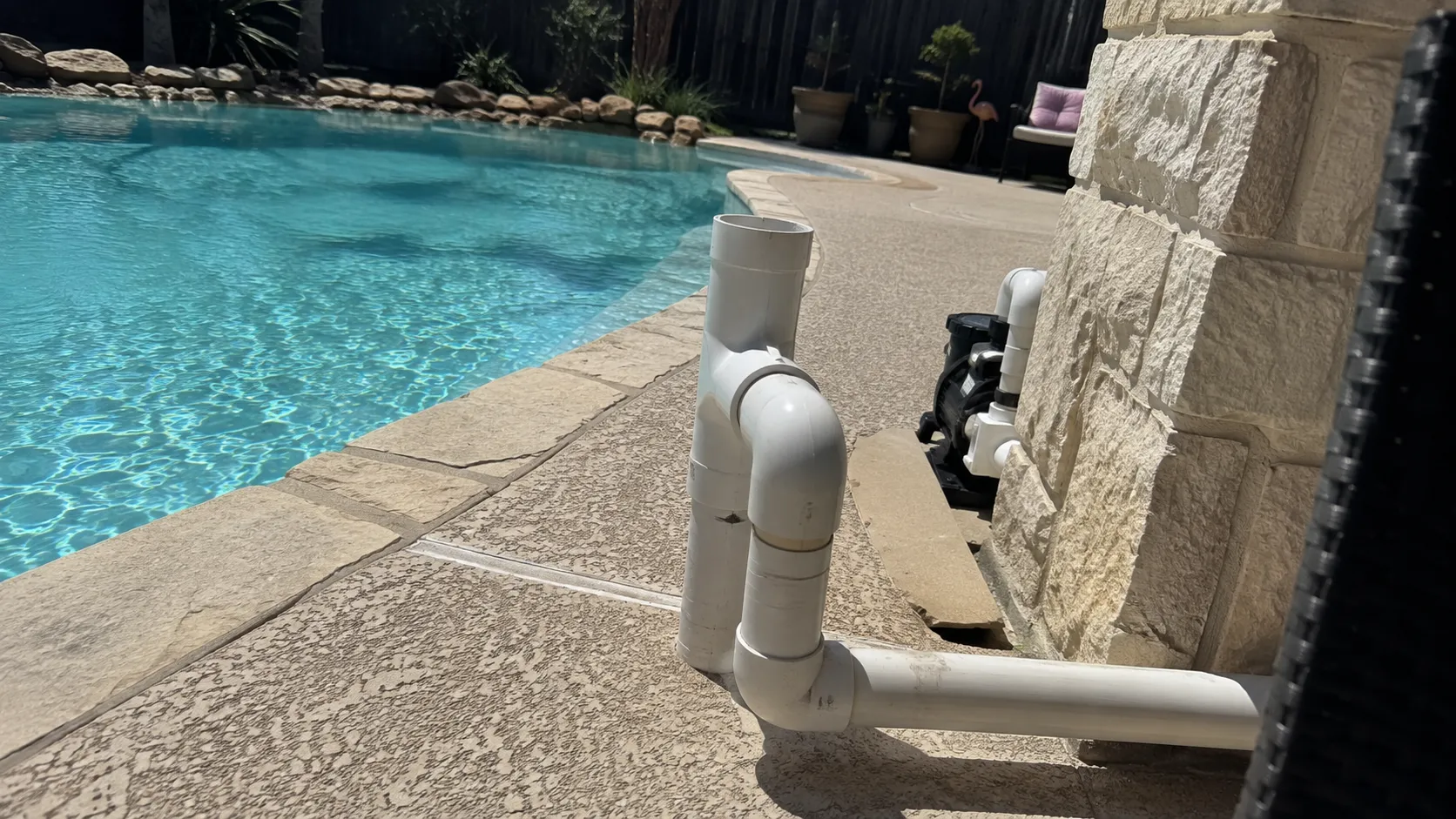
Underground plumbing lines — The PVC pipes that carry water to and from your pool run beneath your deck and yard. Austin's expansive clay soil shifts dramatically with moisture changes. This constant expansion and contraction stresses pipe joints, creating tiny cracks that leak water directly into the ground.
The pool shell — Hairline cracks in gunite or plaster pools can be nearly invisible, especially underwater. These small fractures can leak steadily without any surface-level sign.
Skimmer connections — The joint where your skimmer meets the pool wall is a common failure point. The seal can deteriorate over time, allowing water to seep out around the skimmer throat.
Return line fittings — The fittings where filtered water re-enters your pool can loosen or develop cracks. Water escapes around the gaskets and disappears into the surrounding soil.
Light niche and conduit — The conduit that carries the electrical wiring to your pool light is sealed with putty or caulk. Over time, this seal breaks down. Water follows the conduit pipe and leaks out behind the pool wall.
Main drain — The drain at the bottom of your pool connects to buried plumbing. A failing seal or cracked fitting here can cause significant water loss that's impossible to see from the surface.
Warning Signs Your Pool Has a Hidden Leak
Even when a leak isn't visible, it usually leaves clues. Watch for these signs:
- You're adding water more than once a week during normal conditions
- Your water bill has increased without a change in household habits
- Soggy or mushy spots in the yard between the pool and equipment pad
- Cracks appearing in the pool deck or surrounding concrete
- The pool loses water faster with the pump running versus the pump off (this points to a plumbing leak)
- You can't keep your chemicals balanced — constantly adding chlorine or acid
- Air bubbles coming from the return jets when the pump is running
- Algae keeps coming back despite regular treatment
If you notice two or more of these signs, it's time to get a professional pool leak detection done.
Why DIY Leak Detection Usually Doesn't Work
We get it — you want to save money and fix the problem yourself. But pool leaks aren't like a dripping faucet. The source of the leak is almost never where the symptoms appear.
Water follows the path of least resistance underground. A leak in a pipe beneath the deep end could show up as a wet spot 15 feet away near your equipment pad. Without professional detection equipment, you're essentially guessing.
That's where companies like Austin Pool Leak Detection come in. Using advanced LeakTronics technology, our team can:
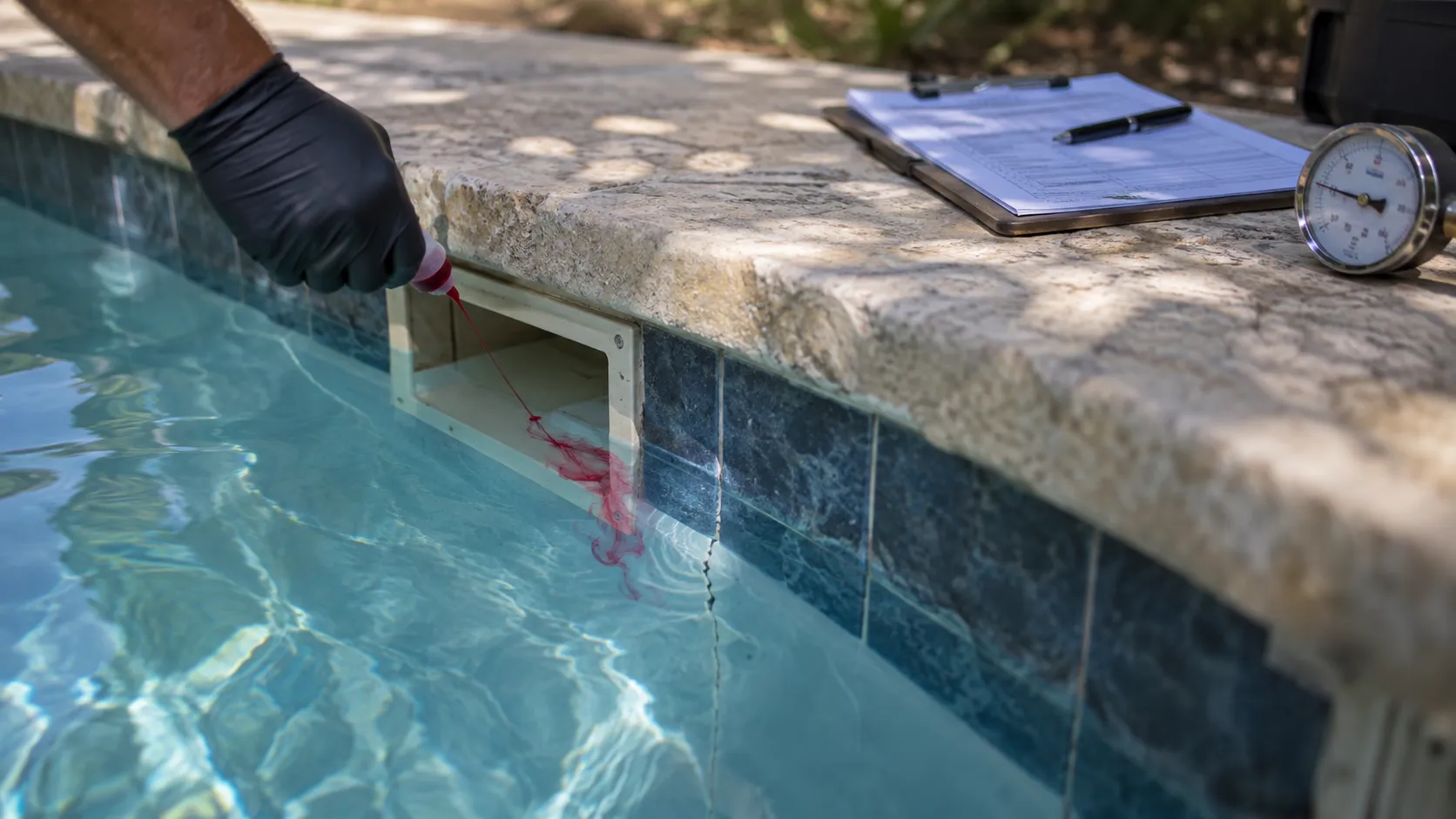
- Listen for leaks with electronic listening devices that pick up the sound of water escaping through cracks in pressurized pipes
- Visually inspect plumbing with pipe cameras that fit into lines as small as 3/4 inch
- Pressure test individual lines to isolate exactly which pipe or fitting is leaking
- Use hydrophones (underwater microphones) to detect leaks in the pool shell, fittings, and drains while the pool is still full of water
All of this is done non-invasively — no digging, no draining, no guesswork.
What Happens If You Ignore a Hidden Pool Leak?
A small leak doesn't stay small. In Austin's soil conditions, the consequences of ignoring a hidden pool leak can escalate quickly:
- Soil erosion underneath the pool deck and structure, leading to settling and cracking
- Foundation issues if the leak saturates the ground near your home
- Equipment damage from running a pump that's constantly pulling air through a cracked suction line
- Skyrocketing water bills — even a small leak can waste 5,000+ gallons per month
- Chemical imbalance that damages the pool surface and promotes algae growth
- Structural damage to the pool shell as the surrounding earth shifts
The average Austin homeowner who waits to address a hidden pool leak ends up spending 3–5x more on repairs compared to catching it early.
How Austin Pool Leak Detection Finds Your Hidden Leak
Our 3-step process is designed to get you answers fast:
Step 1: Initial Inspection & AssessmentWe examine your pool, equipment, and surrounding areas visually. We discuss the symptoms you've noticed and run basic pressure tests to narrow down the problem areas.
Step 2: Advanced Detection TestingUsing LeakTronics sonar, pipe cameras, and hydrostatic testing, we locate the exact source of the leak — down to the inch. No digging. No draining.
Step 3: Detailed Report & RecommendationsYou receive a full report with photos, findings, and repair recommendations. We stand behind our work with a "find it or keep looking" guarantee.
We proudly serve Austin, Buda, Lakeway, San Marcos, New Braunfels, Canyon Lake, and all surrounding areas.
Stop Guessing. Start Knowing.
If your pool is losing water but you can't find the leak, don't keep filling and hoping the problem goes away. Every day you wait, the leak gets worse and the repair gets more expensive.
Austin Pool Leak Detection has over 5 years of experience, 238+ completed projects, and the advanced technology to find what's hiding beneath the surface.
📞 Call us today: 737-394-5325✉️ Email: hi@austinpoolleakdetection.com🌐 Visit: www.austinpoolleakdetection.com📍 See Our 5-Star Google Reviews
Austin Pool Leak Detection — Fast, precise, guaranteed. Proudly serving Austin, TX and all surrounding areas with professional pool leak detection, pool leak repair, and pool inspection services.
.png)