.png)
Skimmer Leak Repair for Austin Pools: Stop Water Loss Fast
We find and fix every pool skimmer leak fast so your swimming pool stops losing water call today for expert repair.
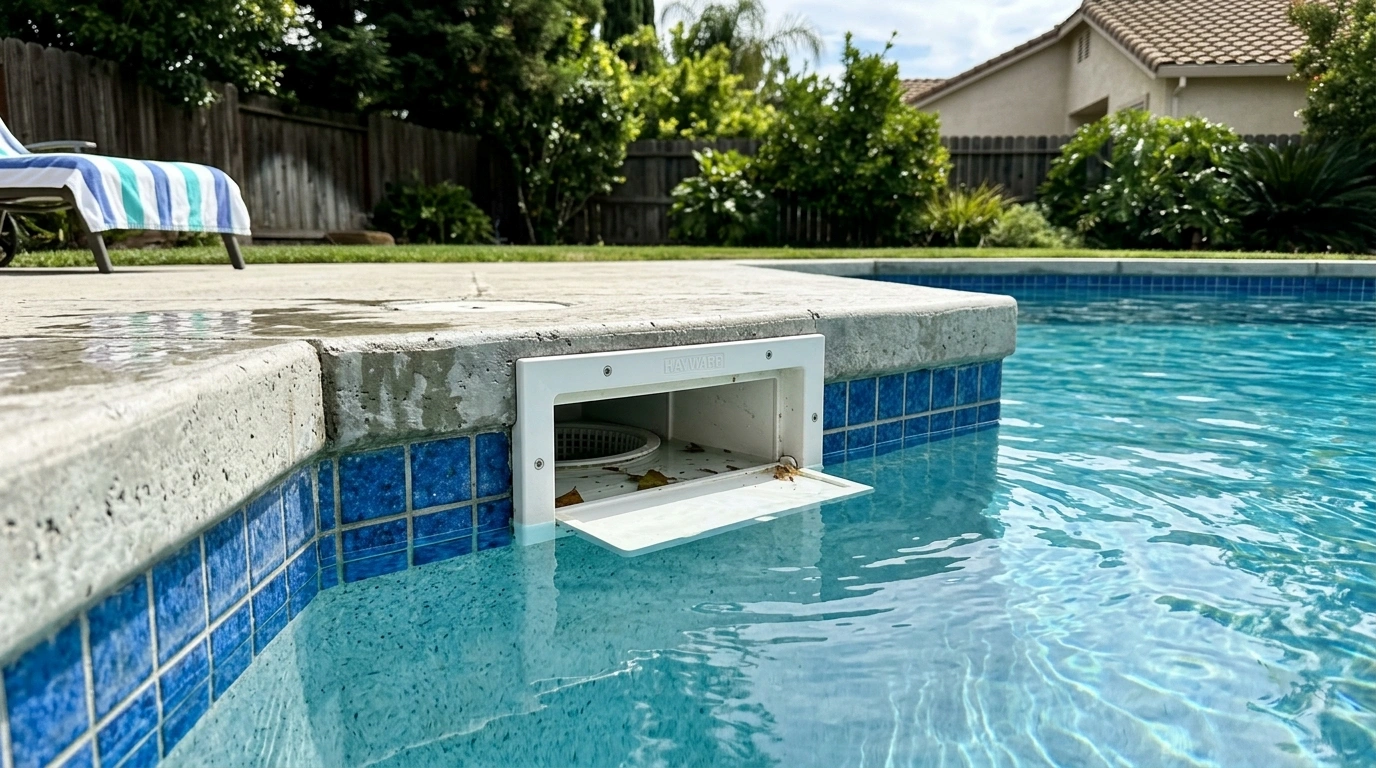
If your swimming pool is losing water and the level keeps dropping to the bottom of the skimmer and stopping there, you are probably dealing with one of the most common pool leaks in Austin a skimmer leak. The skimmer is one of the hardest-working components in your pool's circulation system, and it is also one of the most vulnerable to cracking, separation, and long-term wear and tear. In Central Texas, where shifting soil, Austin heat, and seasonal temperature swings put constant stress on pool structures, skimmer leaks are something nearly every pool owner will face at some point.
The good news is that skimmer leak repair is one of the most straightforward fixes in swimming pool repair when it is caught early and diagnosed correctly. The bad news is that many pool owners do not realize their skimmer is the problem until the leak has already caused damage to the concrete around the pool, destabilized the surrounding soil, or forced the pool pump to run dry and burn out.
At Austin Pool Leak Detection, we are leak specialists who handle skimmer leak detection and repair across Austin and the surrounding areas, including Lakeway, Buda, San Marcos, New Braunfels, Canyon Lake, and Round Rock. Our Leaktronics-certified technicians pinpoint skimmer leaks with precision and coordinate repair services that stop water loss fast and protect your pool for the long run.
Why Pool Skimmers Leak: The Most Common Causes
The pool skimmer sits at the waterline and connects to the pool's circulation system through a throat that passes through the pool wall. It is a transition point between two different materials typically a plastic skimmer body bonded to a concrete pool shell and that joint is where most skimmer leaks originate. Understanding why skimmers leak helps you catch the problem earlier and avoid costly damage.
Separation between the skimmer body and the pool wall.
This is the number one cause of skimmer leaks in Austin swimming pools. Over time, the bond between the plastic skimmer and the concrete or gunite pool wall breaks down. Soil movement, temperature cycling, and the natural settling of the pool structure all contribute to this separation. Once a gap forms, water seeps through the joint and into the soil behind the skimmer — and you start losing water steadily.
Cracks in the skimmer throat or body.
The skimmer throat — the opening where water enters from the pool — takes a beating from debris, freeze events, and chemical exposure. Hairline cracks can develop in the plastic over time, especially in older pools. A crack in the skimmer body itself is less common but does happen, particularly when tree roots or soil pressure push against the skimmer housing from the outside.
Failed caulking or sealant around the skimmer mouth.
Many skimmers have a bead of sealant between the faceplate and the pool wall. That sealant degrades over years of UV exposure, chemical contact, and water pressure. When it fails, water finds its way through the gap. This is often a small leak at first, but it grows as the sealant continues to deteriorate.
Cracked or deteriorated grout at the tile line near the skimmer.
The tile line that runs across the top of the pool wall often passes directly alongside or above the skimmer opening. If the grout fails in this area, water can seep behind the tile and migrate into the skimmer joint, accelerating the separation and making the leak worse.
Skimmer plumbing connection failure.
The pipe that connects the bottom of the skimmer to the suction plumbing can crack, separate, or develop a leak at the fitting. This type of leak is harder to detect because it happens below the deck and underground. A pressure test is typically required to confirm it.
How to Detect a Skimmer Leak Before It Gets Worse
Catching a skimmer leak early is the single best thing you can do to keep repair costs low and prevent damage to your pool structure and surrounding property. Here are the signs to watch for and a simple test you can perform yourself.
Signs your skimmer may be leaking:
- The water level drops to the bottom of the skimmer and stabilizes. This is the classic indicator. If the pool stops losing water once the level falls below the skimmer mouth, the leak is almost certainly at or near the skimmer. Water can only escape through the leak when it is in contact with the compromised area.
- You see a visible crack or gap around the skimmer faceplate. Pull the skimmer basket out and look closely at the joint where the skimmer meets the pool wall. Any visible separation, crumbling concrete, or missing sealant is a potential leak point.
- The area behind the skimmer stays damp. Walk around the pool deck near the skimmer and check for soft or soggy ground. Water escaping through a skimmer leak saturates the soil directly behind the skimmer wall.
- The pool pump struggles to maintain suction. When the water level drops near the skimmer opening, the pump starts pulling air. You may hear gurgling, see air bubbles in the pump basket, or notice the pump losing prime. This is hard on the motor and shortens its life.
- You are constantly refilling your pool. If topping off the pool has become a weekly routine and you cannot explain the water loss through evaporation alone, a skimmer leak is one of the first things to investigate.
The dye test for skimmer leaks:
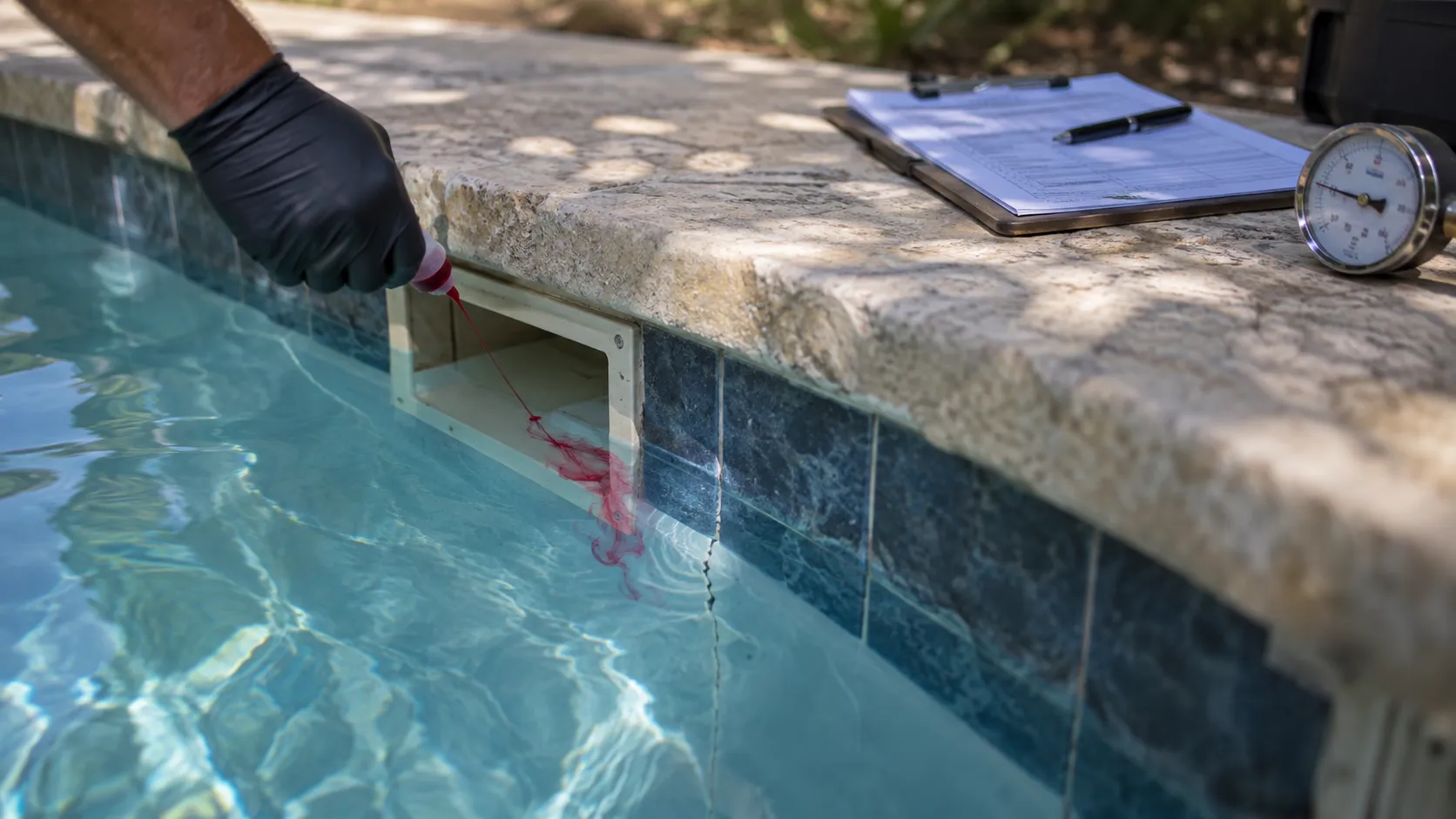
The easiest way to confirm a skimmer leak at home is with a simple dye test. Turn off the pool pump so the water is completely still. Squeeze a small amount of leak detection dye or even dark food coloring along the joint where the skimmer meets the pool wall. Release the dye slowly and watch closely.
If there is a leak, you will see the dye get pulled into the gap, crack, or separation. The current created by escaping water draws the dye directly toward the leak point. Test all the way around the skimmer mouth, the faceplate edges, and the throat. If the dye drifts away without being pulled anywhere, the skimmer joint may be intact and the leak could be elsewhere.
You can also perform a bucket test to confirm overall water loss. Fill a bucket with pool water, set it on the top step, mark the water level inside and on the pool side, and wait 24 hours. If the pool's water level drops significantly more than the bucket, the pool is leaking and combined with the symptoms above, the skimmer is the most likely suspect.
How Professional Skimmer Leak Detection Works
A dye test can confirm a skimmer leak at the visible joint, but not all skimmer leaks are at the surface. Leaks at the skimmer plumbing connection, inside the throat below the waterline, or in the pipe run beneath the deck require professional pool leak detection equipment to locate accurately.
At Austin Pool Leak Detection, our process for skimmer leak detection service includes:
- Visual inspection of the entire skimmer assembly. We examine the skimmer body, faceplate, throat, coping joint, and the tile line around the skimmer for any visible crack, separation, or deterioration.
- Targeted dye testing. We apply dye at every potential leak point around the skimmer — the wall joint, faceplate gasket, throat, and any visible cracks. This confirms exactly where water is escaping at the shell level.
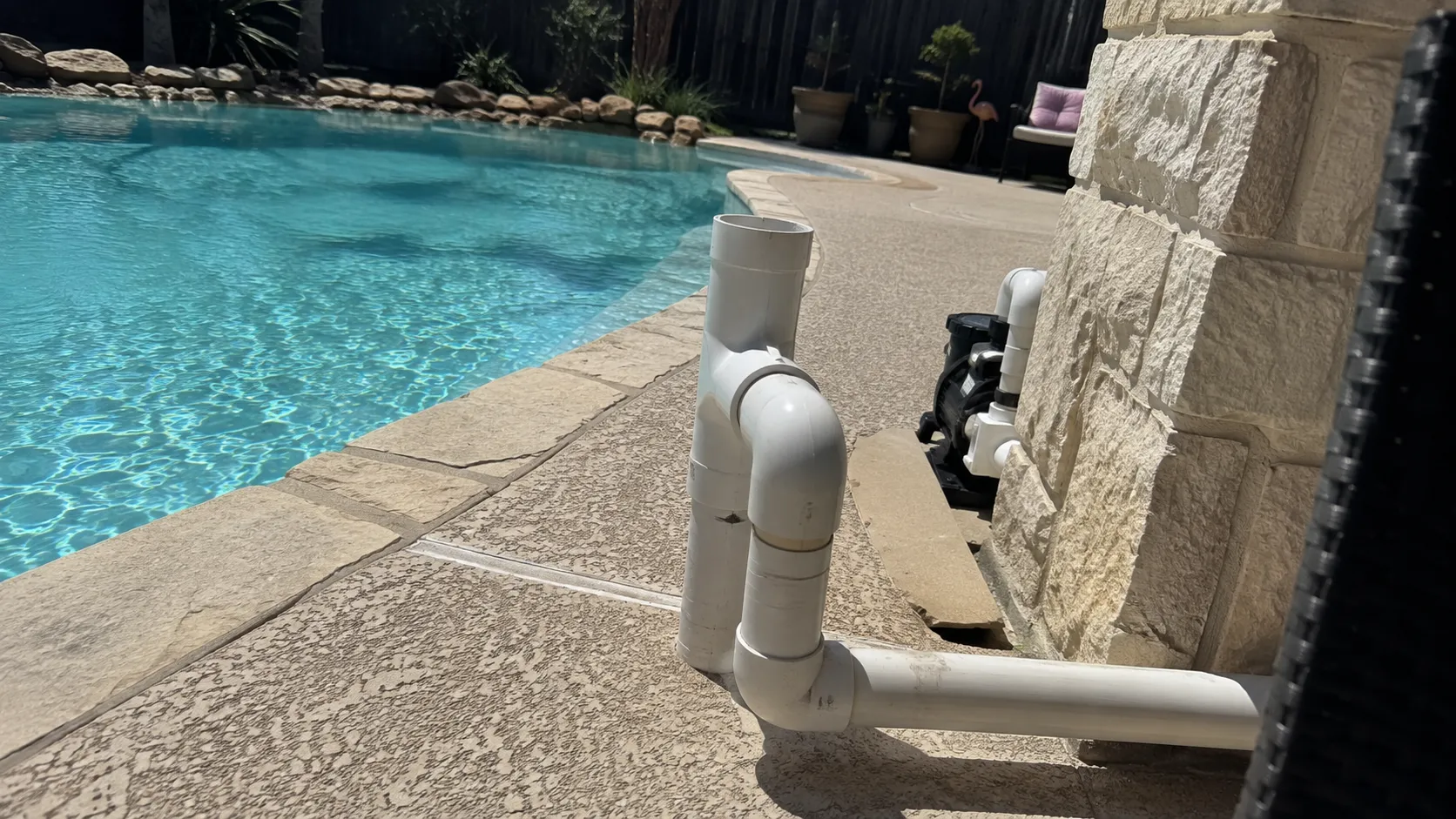
- Pressure testing of the skimmer line. We isolate the skimmer suction line from the rest of the pool's plumbing and pressurize it independently. If the line does not hold pressure, there is a leak in the pipe between the skimmer and the equipment pad. This is the only reliable way to detect a leak in the underground skimmer plumbing.
- Acoustic listening (when needed). If the pressure test confirms a line leak, we use acoustic detection equipment to listen for the sound of air or water escaping underground. This lets us pinpoint the exact location of the pipe failure without digging up the entire run.
This multi-step approach ensures we find every active leak — not just the obvious one at the surface. Many skimmers have more than one leak point, and addressing only the visible crack while ignoring a failing pipe connection underneath means you will be calling again in a few months.
Skimmer Leak Repair Options: From Quick Fixes to Full Skimmer Replacement
The right repair depends on where the leak is, how severe the damage is, and the overall condition of the skimmer. Here are the most common skimmer leak repair options our team coordinates for Austin pool owners:
For most skimmer leaks caught early — a separation at the wall joint, a minor crack, or failed sealant — a professional skimmer repair using epoxy, pool putty, or sealant replacement is effective and affordable. These repairs typically last years when done correctly with the right materials.
When the skimmer body is severely cracked, the throat is structurally compromised, or the skimmer has been leaking long enough to erode the concrete behind it, a full skimmer replacement and repair is the better long-term solution. This is a more involved repair that includes cutting out the old skimmer, re-plumbing the suction line, patching the pool shell, and refinishing the area with new pool plaster and pool tile. It costs more upfront, but it eliminates the problem completely and restores that section of the pool to like-new condition.
If you are already planning a pool remodeling or resurfacing project, bundling skimmer replacement and repair into the scope makes it more cost-effective. Addressing pool leaks during a renovation avoids the need to tear into freshly finished surfaces later.
What Happens When a Skimmer Leak Goes Unrepaired
A small leak at the skimmer might seem manageable. You top off the pool, adjust the chemicals, and move on. But every day that leak runs, the damage grows in ways that are not always visible from the surface.
Concrete erosion behind the skimmer. Water escaping through the skimmer joint migrates into the soil and concrete behind the pool wall. Over time, that moisture dissolves bonding material, undermines the structural support around the skimmer, and widens the original gap. A small leak that could have been sealed with epoxy becomes a major crack repair or full skimmer replacement.
Soil washout and deck damage. The soil directly behind and beneath the skimmer erodes as water saturates it. In Central Texas, where expansive clay is common, the cycle of wetting and drying creates uneven ground movement. The pool deck near the skimmer settles, cracks, or separates from the coping — adding deck repair to the bill on top of the skimmer fix.
Pool pump damage. A skimmer leak that lowers the water level below the skimmer mouth means the pump draws air instead of water. Running dry even briefly overheats the shaft seal and can burn out the motor. Replacing a pool pump costs significantly more than fixing the skimmer leak that caused the problem.
Higher water bills. A moderate skimmer leak can waste 200 to 800 gallons of water per week. Over a full swimming season in Austin, that adds up to thousands of gallons of wasted water and a noticeably higher utility bill.
Chemical waste. Every gallon of water that leaks out takes dissolved chlorine, stabilizer, and other chemicals with it. You spend more on chemicals trying to maintain balance in a pool that is constantly diluting itself with fresh fill water.
The bottom line: fixing a skimmer leak promptly is always cheaper than dealing with the cascade of damage that follows when it is ignored. Don't let pool leaks drain your wallet or damage your property.
Why Austin Pool Owners Trust Our Leak Specialists for Skimmer Repair
Austin Pool Leak Detection is not a general pool service company. We are leak specialists pool leak detection and repair is all we do, every single day. That specialization means we have seen every type of skimmer leak, in every type of pool construction, across every soil condition in Central Texas. We know what to look for, how to locate the exact location of the failure, and which repair options deliver lasting results.
Our Leaktronics-certified technicians use professional pool leak detection equipment including pressure testing, acoustic listening, dye testing, and pipe cameras to diagnose skimmer leaks with precision. We provide a detailed report with photos, findings, and repair options so you understand exactly what needs to be fixed before any work begins.
We serve pool owners throughout Austin, TX and the surrounding areas — Lakeway, Buda, San Marcos, New Braunfels, Canyon Lake, and Round Rock. Whether you have a concrete pool with a failing skimmer joint, a vinyl liner pool with a skimmer fitting issue, or a spa that is losing water at the skimmer connection, we will find the leak, explain your options, and help you keep your pool in great shape.
Stop losing water. Call Austin Pool Leak Detection today at 737-394-5325 for fast, accurate skimmer leak detection and repair. We find every leak so you can get back to enjoying your pool not worrying about it.
.png)